
United Airlines Flight UA770
Introduction to United Airlines Flight UA770
United Airlines Flight UA770 is a transatlantic passenger flight connecting Barcelona (BCN) and Chicago O’Hare (ORD). This flight plays a vital role in connecting Europe and the United States, supporting business, tourism, and international travelers. Operated primarily with Boeing 787 Dreamliners, UA770 is renowned for passenger comfort, fuel efficiency, and safety on long-haul flights. Understanding this flight involves exploring its scheduled route, aircraft, passenger experience, operational history, and significant incidents.
What Happened to United Airlines Flight UA770?
On May 27, 2025, UA770 faced an unexpected cabin pressurization anomaly while en route to Chicago. The flight crew activated the Squawk 7700 emergency code, alerting air traffic control to a general emergency. Following protocol, the aircraft diverted to London Heathrow Airport (LHR) to ensure passenger safety. The plane landed safely, and emergency services were on standby. No passengers or crew were injured.
United Airlines provided rebooking, hotel accommodations, and meals. The aircraft underwent thorough technical inspections before resuming normal operations, demonstrating the airline’s commitment to safety-first practices.
Understanding Airline Emergency Diversions
Emergency diversions are a critical safety practice in commercial aviation that occurs when a flight cannot safely continue to its original destination due to potential technical issues, safety alerts, or medical concerns. On United Airlines Flight UA770, the crew detected a potential problem with the cabin pressurization system while cruising at altitude. Although pressurization systems are designed to maintain breathable air in the cabin, any indication of malfunction even without a full loss of pressure triggers standard protocols that prioritize safety.
In such cases, pilots declare an emergency by activating Squawk 7700, the universal transponder code that alerts air traffic control (ATC) to a general in‑flight emergency. ATC then gives the aircraft priority routing and clearance to the nearest suitable airport. For UA770, that airport was London Heathrow (LHR), chosen for its extensive emergency response infrastructure and ability to handle large aircraft like the Boeing 787‑9 Dreamliner.
Emergency diversions like this are rare but essential they reflect a precautionary approach where crew, ATC, and safety systems work in unison to mitigate risk and ensure passenger well‑being, even when the issue is only a warning rather than a confirmed failure.
Statement from United Airlines and Passenger Reactions
In response to the diversion of United Airlines Flight UA770 on May 27, 2025, United Airlines issued statements emphasizing that passenger safety was the highest priority. The carrier confirmed that the crew detected an alert related to the cabin pressurization system and, following aviation safety rules, declared an emergency and diverted the flight to London Heathrow Airport.
United said that the aircraft landed safely on Runway 27R and that no injuries were reported among passengers or crew. The airline also outlined support efforts, including rebooking affected travelers, arranging hotel accommodations, and issuing meal vouchers as needed.
Passengers’ reactions reflected relief and recognition of effective handling. Many onboard described initial concern when the captain announced the diversion, but multiple accounts noted that cabin crew and pilots communicated calmly and clearly, which helped maintain order and reduce anxiety.
Following the safe landing, travelers expressed appreciation for the crew’s professionalism and United’s prompt assistance. Some passengers recounted their experiences publicly, highlighting the airline’s reassurance and structured support during the unexpected diversion.
Key Facts from Verified Reporting on UA770 (May 27, 2025)
- The Boeing 787‑9 Dreamliner declared an emergency mid‑flight due to a suspected cabin pressurization system alert.
- Squawk 7700 was used to signal an in‑flight emergency to ATC, which then cleared the aircraft for priority diversion.
- UA770 diverted and landed safely at London Heathrow Airport, with no injuries reported.
- United Airlines provided passenger support (rebooking, hotel, meals) after the diversion
Scheduled Route and Aircraft
UA770 covers approximately 4,432 miles (7,131 km), with flight times ranging from 9 hours 40 minutes to 10 hours 5 minutes, depending on weather and seasonal winds. United Airlines uses Boeing 787-8 or 787-9 Dreamliners, featuring quieter cabins, modern entertainment systems, and ergonomic seating. Departures from Barcelona usually occur in the afternoon, arriving in Chicago by early evening. The flight’s consistency and reliability make it a key transatlantic route in United’s global network.
Passenger Experience and Amenities
Travelers on UA770 benefit from a mix of comfort and technology. Business class features fully reclining seats and premium meals, while economy passengers enjoy ergonomic seating and in-flight entertainment. The Dreamliner provides Wi-Fi connectivity, cabin pressurization for reduced fatigue, and a quieter environment.
Flight attendants are trained to provide attentive service, including meal accommodations and safety guidance. The combination of amenities, service, and safety measures ensures a pleasant journey for all passengers.
Flight Operations and Scheduling
UA770 operates daily with schedules optimized for both European and U.S. travelers. Flights depart Barcelona in the afternoon and arrive in Chicago in the evening local time, allowing connections to United’s domestic flights. Pilots are highly trained for transatlantic operations, including long-range navigation, fuel management, and emergency procedures. Pre-flight inspections, safety checks, and flight planning are integral to ensuring operational efficiency and passenger safety on every UA770 flight.
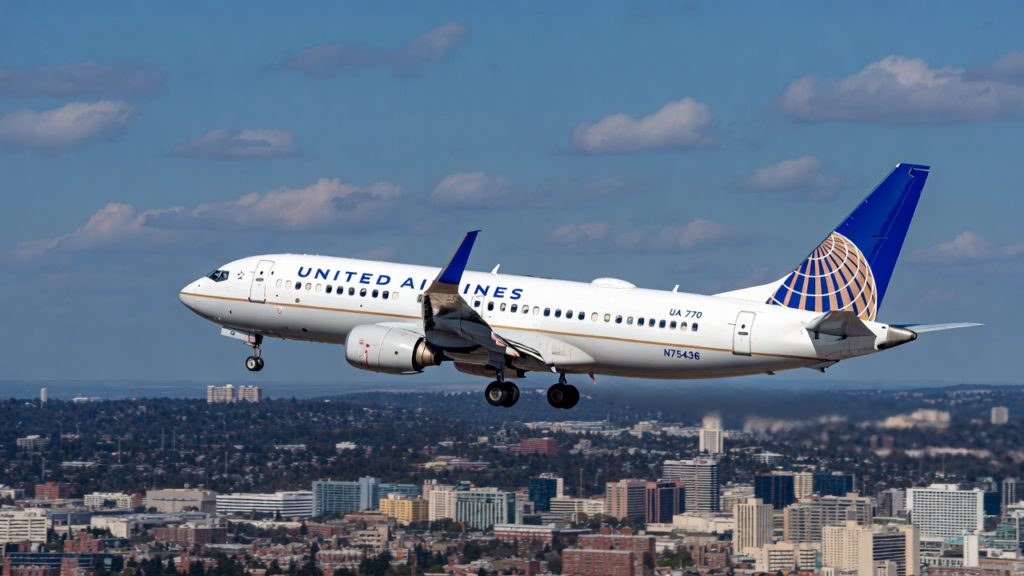
Safety Protocols on UA770
UA770 adheres to strict FAA and international safety standards. Pre-flight inspections cover engine performance, navigation systems, and cabin pressurization. Pilots monitor aircraft systems continuously, ready to initiate emergency procedures if anomalies are detected.
Crew members are trained for decompression events, medical emergencies, and diversions. The 2025 incident highlights the effectiveness of safety protocols, ensuring no harm came to passengers or crew while maintaining operational reliability.
Technical Explanation of Emergency Diversions
Emergency diversions are initiated when the flight crew detects a risk that may compromise passenger or aircraft safety. For UA770, the alert involved cabin pressurization, a critical system that maintains breathable air at high altitudes.
When the anomaly was detected:
- Pilots assessed the system readings to determine risk.
- The flight declared an emergency using Squawk 7700, signaling ATC for priority clearance.
- Air traffic controllers coordinated a diversion to the nearest suitable airport London Heathrow which is equipped for large aircraft and emergency services.
Diversions are precautionary, not indicative of catastrophic failure. They showcase crew training, safety protocols, and coordination with ground teams.
Connecting Flights and International Travel
UA770 serves as a critical link for passengers traveling to the U.S. or Europe. Passengers arriving in Chicago can connect to other U.S. cities through United’s domestic network, while European travelers benefit from easy connections via Barcelona.
The flight enables efficient international travel, accommodating business, tourism, and family trips. Reliable scheduling and seamless connections make UA770 a preferred choice for transatlantic travel.
UA770 Emergency Timeline & Key Flight Data
| Time (Local) | Event |
|---|---|
| 15:15 CEST | Departure from Barcelona |
| UA770 departed Barcelona as scheduled with full crew and passenger briefing completed. | |
| 18:00 CEST | Cabin pressurization anomaly detected |
| The flight crew noticed a minor pressurization irregularity and began monitoring the cabin systems closely. | |
| 18:05 CEST | Pilots declare emergency using Squawk 7700 |
| Standard emergency protocols were activated, notifying air traffic control of a general emergency. | |
| 19:30 BST | Flight diverts to London Heathrow |
| Emergency landing was coordinated with Heathrow ATC, and ground emergency services were alerted. | |
| 19:55 BST | Safe landing on Runway 27R |
| UA770 landed safely with all passengers and crew accounted for. | |
| Post-Landing | Passengers assisted with rebooking and accommodations |
| Passengers were provided hotel stays, meals, and next available flights by United Airlines. | |
| Parameter | Details |
|---|---|
| Distance | 4,432 miles (7,131 km) |
| UA770 covers the Atlantic route efficiently with high operational reliability. | |
| Flight Duration | 9h 40m–10h 05m |
| Flight times depend on weather, seasonal winds, and air traffic conditions. | |
| Aircraft | Boeing 787-8/9 Dreamliner |
| Modern Dreamliner features include reduced cabin noise, fuel efficiency, and Wi-Fi connectivity. | |
| Frequency | Daily |
| UA770 operates daily, providing consistent connectivity for international travelers. | |
| Altitude | ~37,000 ft cruising |
| The cruise altitude ensures fuel efficiency and smooth flight performance over the Atlantic. | |
| Speed | ~441 knots |
| This typical cruising speed allows UA770 to maintain schedule reliability and efficient fuel use. | |
Safety Protocols on UA770
UA770 follows strict FAA and international aviation standards. Safety protocols include:
- Cabin pressurization monitoring
- Pre-flight system checks
- Emergency training for crew
- Rapid response to technical alerts
The 2025 incident confirms that emergency protocols are effective, with no harm to passengers or crew.
Operational Challenges of Transatlantic Flights
Flights like UA770 face unique challenges including weather conditions, air traffic congestion, and long-range fuel planning. Strong headwinds, storms, and oceanic traffic require precise flight planning. Passenger comfort must also be maintained over extended durations, requiring attentive service and cabin management.
Despite these challenges, UA770 consistently maintains high operational reliability due to advanced flight systems, experienced crews, and careful planning.
Technology and In-Flight Systems
UA770’s Boeing 787 aircraft feature advanced avionics, glass cockpit displays, automated monitoring systems, and fuel-efficient engines. Cabin pressurization and climate control optimize comfort, while Wi-Fi connectivity allows passengers to remain connected.
These systems also provide real-time alerts to the crew, enabling prompt responses to anomalies, like the May 2025 pressurization issue. This technology enhances safety and efficiency while delivering a superior passenger experience.
Airline Response and Customer Care
United Airlines prioritizes passenger care during disruptions. In the 2025 diversion, the airline provided:
- Rebooking on next available flights
- Hotel accommodations
- Meal vouchers and transport assistance
This approach ensures passenger trust and satisfaction, highlighting United’s focus on proactive support and transparent communication. UA770’s handling of this emergency serves as a model for airline crisis management.
Environmental Considerations
UA770 operates with environmental responsibility in mind. Boeing 787 Dreamliners reduce fuel consumption compared to older models. United Airlines implements flight path optimization and carbon offset programs, minimizing environmental impact.
These initiatives reflect the airline industry’s growing commitment to sustainable aviation, balancing passenger convenience with ecological responsibility.
Passenger Amenities and Experience
The Dreamliner’s modern cabins provide ergonomic seating, Wi-Fi, and entertainment systems. Business class features fully flat beds, premium meals, and priority boarding.
Economy class passengers enjoy personal screens, ample legroom, and attentive service. Flight attendants ensure comfort, safety, and efficient service, including dietary accommodations and accessibility support. Passengers can also benefit from virtual navigation and real-time flight updates through United’s app.
Pros and Cons of Flying UA770
Pros:
- Daily scheduled transatlantic service
- Modern Boeing 787 Dreamliner with comfort amenities
- Experienced crew with strong safety protocols
- Efficient international connections
- Advanced technology for smooth operations
Cons:
- Potential delays due to weather or ATC congestion
- Limited meal options for some passengers
- Long-haul flights may cause fatigue
- Occasional emergency diversions, though rare
- Cost of business-class tickets may be high
Traveler Tips and Future Outlook
Passengers on UA770 should:
- Arrive early to navigate airport security efficiently
- Use United’s mobile app for boarding updates and digital check-in
- Bring noise-cancelling headphones and comfort items for the 10-hour flight
- Monitor live flight status for potential schedule changes
Future outlook: UA770 will continue leveraging Boeing 787 technology, enhanced safety protocols, and environmental initiatives like fuel efficiency and carbon offsets. This ensures safe, sustainable, and comfortable transatlantic travel for years to come.
Conclusion: Future Outlook
UA770 exemplifies United Airlines’ excellence in transatlantic operations. The May 2025 emergency diversion demonstrated effective safety protocols and rapid response capabilities. Modern aircraft, passenger amenities, and operational planning contribute to a reliable travel experience.
Looking ahead, technological advancements, enhanced fuel efficiency, and sustainable practices will further optimize UA770’s operations. Passengers can expect continued safety, comfort, and efficiency, making UA770 a key connector between Europe and the U.S.
Frequently Asked Questions (FAQs) – United Airlines Flight UA770
A1: United Airlines Flight UA770 is a transatlantic flight connecting Barcelona (BCN) and Chicago O’Hare (ORD), operated mainly using Boeing 787 Dreamliners for long-haul passenger comfort and efficiency.
A2: On May 27, 2025, UA770 experienced a cabin pressurization anomaly mid-flight. The pilots declared an emergency (Squawk 7700) and safely diverted to London Heathrow Airport (LHR). No passengers or crew were injured.
A3: The flight duration is approximately 9 hours 40 minutes to 10 hours 5 minutes, depending on weather conditions, seasonal winds, and air traffic.
A4: UA770 is typically operated with Boeing 787-8 or 787-9 Dreamliners, which offer quieter cabins, advanced climate control, fuel efficiency, and in-flight Wi-Fi.
A5: UA770 follows strict FAA and international aviation safety protocols, including pre-flight inspections, continuous in-flight monitoring, crew emergency training, and contingency plans for diversions or technical anomalies.
Disclaimer:
This content is published for informational and news reporting purposes only. It is based on publicly available sources and aviation data at the time of writing. The article is not affiliated with or endorsed by United Airlines or any aviation authority. Flight details, timelines, and circumstances may change as new information emerges. Readers should rely on official airline statements and authorities for confirmed updates.
You May Also Like: Oratory Crossword Clue: The Complete Guide with Solutions, Tips, and Examples
For More Information, visit newsreflect
About the Author


