
Team Disquantified
Modern workplaces are evolving beyond traditional metrics. While KPIs, scorecards, and numeric performance metrics once dominated corporate evaluation, research shows over-reliance on quantification can stifle creativity, collaboration, and employee satisfaction. Team Disquantified represents a new paradigm in which team effectiveness is measured by collaboration, qualitative outcomes, and human factors rather than raw numbers. This approach emphasizes autonomy, trust, adaptability, and innovation.
Teams are assessed on how well they solve problems collectively, how they communicate, and the impact of their solutions. Leaders in these systems focus less on individual quotas and more on facilitating a healthy, collaborative work culture.
By creating a psychologically safe environment where people feel empowered, disquantified teams often outperform traditional teams in knowledge-driven, creative, and tech-focused industries. This method bridges the gap between human potential and organizational goals, ensuring teams are productive, motivated, and capable of handling complexity efficiently.
What Does “Team Disquantified” Mean?
A Team Disquantified approach removes the traditional emphasis on numeric evaluation, replacing it with human-centered assessment. Unlike conventional teams, where performance is measured by KPIs, metrics, or quotas, disquantified teams prioritize collaboration, adaptability, problem-solving, and qualitative impact. The philosophy is that numbers cannot fully capture the nuances of teamwork, creativity, or critical thinking.
For example, a project may succeed due to strong collaboration and innovative ideas, even if individual performance metrics appear modest. Disquantified teams use peer feedback, narrative assessments, and project outcomes as primary measures of success. By doing so, organizations encourage members to focus on solutions and long-term impact, rather than chasing arbitrary numeric targets.
This leads to enhanced engagement, higher morale, and reduced burnout, making it ideal for modern workplaces where knowledge, creativity, and adaptability are central to achieving strategic goals.
Interactive Table: Key Differences Between Traditional and Disquantified Teams
| Feature | Traditional Team | Team Disquantified |
|---|---|---|
| Evaluation | KPIs & metrics | Qualitative feedback & outcomes |
| Roles | Fixed job descriptions | Flexible, skills-based |
| Leadership | Assigned manager | Emergent based on expertise |
| Collaboration | Individual focus | Collective success focus |
| Feedback | Annual reviews | Continuous narrative feedback |
| Work Structure | Department silos | Project-based or fluid groups |
Interactive Suggestion: Use hover effects to highlight each row, expand with examples, or link to real-world case studies.
Why Traditional Metrics Are Limiting
Traditional metrics like KPIs, quotas, and scorecards often fail to reflect real-world team performance. While they provide a quantifiable framework, they can create pressure, stress, and unhealthy competition, causing employees to focus on “hitting numbers” rather than solving complex problems effectively. Many knowledge-driven projects, creative campaigns, or R&D initiatives involve outputs that are difficult to quantify.
By emphasizing numeric targets, organizations risk undermining collaboration, innovation, and intrinsic motivation. Disquantified teams focus on contextual evaluation, assessing how effectively teams solve problems, adapt to challenges, and work cohesively.
The goal is to measure outcomes and impact rather than activity alone. This approach also improves employee retention and satisfaction by creating a supportive environment where people are encouraged to take initiative and contribute ideas freely, without the fear of being judged solely by numbers.
Core Principles of Team Disquantified
The foundation of a disquantified team rests on human-centered values and flexible practices. Core principles include:
1) Qualitative Assessment: focusing on narrative feedback, peer evaluations, and real-world impact.
2) Fluid Roles: responsibilities shift based on expertise and project needs.
3) Collaboration Over Competition: team achievements are prioritized over individual metrics; 4) Emergent Leadership: leaders emerge naturally based on skill and contribution.
5) Balanced Metrics: limited use of numbers to complement qualitative insights. Implementing these principles creates an environment where creativity, innovation, and trust thrive. Teams feel empowered to experiment, problem-solve collaboratively, and take ownership of outcomes, resulting in higher performance, reduced stress, and meaningful achievements. This principle-driven framework ensures that organizations remain competitive while maintaining a healthy, people-first culture.
Benefits of Implementing Team Disquantified
Teams adopting disquantified principles gain several advantages. First, creativity increases as employees are free from restrictive numeric evaluations. Second, collaboration improves since the focus is on collective results rather than individual performance scores. Third, psychological safety enhances engagement, leading to higher productivity and retention.
Flexible roles allow teams to adapt quickly to changes, enabling agile problem-solving. Additionally, focusing on qualitative outcomes ensures that work has real-world impact rather than just satisfying numeric benchmarks. Organizations report faster innovation cycles, reduced burnout, and improved team morale.
Employees are motivated to contribute ideas and solutions, not just chase metrics. Ultimately, Team Disquantified aligns individual fulfillment with organizational goals, making it an effective strategy for knowledge-driven, creative, and tech-oriented companies seeking long-term success.
Challenges and How to Overcome Them
While the benefits are significant, implementing Team Disquantified can be challenging. Trust is critical: leaders must empower teams to self-manage without constant supervision. Assessment becomes subjective, requiring careful qualitative evaluation frameworks.
Scaling to large organizations may be difficult without structured guidance. Change management is also essential, as employees accustomed to numeric KPIs may struggle to adapt. Solutions include hybrid approaches combining selective metrics with narrative feedback, structured peer-review systems, and gradual implementation.
Training leaders to facilitate rather than dictate ensures a smooth transition. Organizations that address these challenges strategically often experience greater engagement, innovation, and resilience, demonstrating that thoughtful adoption of disquantified practices outweighs implementation difficulties.
How Leadership Changes in Disquantified Teams
In disquantified teams, leadership is emergent and situational. Instead of being fixed by hierarchy, leaders arise based on expertise, problem-solving ability, and initiative. This model fosters peer-driven accountability and shared ownership of outcomes.
Leaders facilitate collaboration, remove obstacles, and guide the team without micromanaging. This approach encourages active participation, innovation, and trust, as team members recognize leaders based on value rather than title. Emergent leadership ensures that decision-making is adaptive and responsive, allowing the team to respond efficiently to unexpected challenges while maintaining high engagement and morale.
Flexible Roles and Task Allocation
Disquantified teams use dynamic role assignment. Team members contribute where their skills, interest, and availability are most relevant. Fixed job descriptions are replaced with fluid responsibilities that adjust as projects evolve.
This flexibility improves learning opportunities, utilization of diverse skills, and adaptability. By matching tasks to capabilities, teams solve problems faster and produce higher quality outcomes. Fluid roles also allow employees to develop cross-functional expertise, fostering innovation and strengthening overall team resilience.
Measuring Success Without Numbers
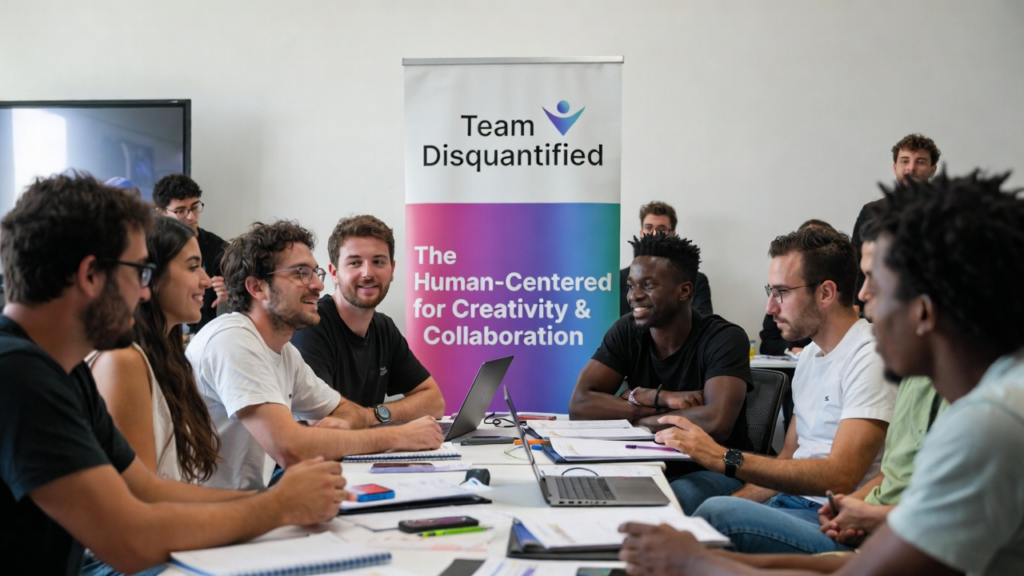
Success in disquantified teams is measured through qualitative, context-driven methods:
- Narrative Feedback: Descriptive evaluations of contributions.
- Peer Reviews: Insightful feedback on collaboration and impact.
- Project Outcomes: Assessing the tangible results of collective efforts.
- Adaptability Metrics: Evaluating how teams respond to unforeseen challenges.
This system ensures comprehensive understanding of performance, avoiding the pitfalls of focusing solely on numeric results, while promoting continuous improvement and growth.
Psychological Safety and Engagement
Psychological safety is critical for team success. In a disquantified team, members feel free to share ideas, take risks, and admit mistakes without fear of judgment. This environment encourages innovation, collaboration, and trust, leading to higher engagement and creativity.
Employees are motivated to contribute authentically, resulting in better problem-solving and sustainable performance. Research confirms that teams with strong psychological safety outperform metric-driven teams in knowledge work, creative industries, and tech projects.
Tools Supporting Disquantified Teams
Digital tools enhance the efficiency of disquantified teams:
- Collaboration Platforms: Slack, Microsoft Teams, Notion
- Project Tracking: Trello, Asana, Jira
- Feedback Systems: 360-degree reviews, peer feedback apps
These tools facilitate transparent communication, qualitative tracking, and adaptive collaboration, ensuring teams remain productive and flexible while maintaining a human-centered approach.
Real-World Applications
- Tech Startups: Agile teams focus on outcomes over KPIs, boosting innovation.
- Creative Agencies: Campaigns succeed through collaborative effort rather than individual scores.
- Remote Teams: Distributed teams use qualitative feedback to coordinate across time zones.
These examples demonstrate that disquantified practices are effective in dynamic, fast-paced environments.
Pros & Cons of Team Disquantified
| Pros | Cons |
|---|---|
| Enhances creativity and innovation | Requires high trust from leaders |
| Encourages collaboration over competition | Subjective performance assessment |
| Reduces burnout and stress | Scaling can be complex in large organizations |
| Flexible roles improve adaptability | Transition from traditional metrics may face resistance |
| Focuses on real-world outcomes | Requires continuous monitoring and qualitative tracking |
Common Misconceptions
- Chaos or lack of accountability: False – the team is structured but evaluated differently.
- Metrics are ignored: False – minimal metrics are used to support qualitative evaluation.
- Only works for small teams: False – with the right framework, large organizations benefit as well.
Future of Team Disquantified
With the rise of AI, automation, and remote work, human skills like creativity, judgment, and collaboration are more valuable than ever. Team Disquantified aligns with these trends, creating engaged, resilient, and innovative teams ready to handle complex, fast-changing work environments. Companies adopting this approach are better positioned for long-term success.
Conclusion
Team Disquantified is not anti-metrics; it is pro-human. By emphasizing collaboration, qualitative outcomes, and emergent leadership, organizations unlock innovation, enhance satisfaction, and foster adaptability. In today’s knowledge-driven and rapidly evolving workplaces, disquantified teams provide a framework for sustainable, human-centered success, ensuring employees and organizations thrive together.
FAQs
Team Disquantified is a human-centered team model focusing on collaboration, creativity, and qualitative outcomes rather than numeric metrics and KPIs.
Success is measured using narrative feedback, peer reviews, project outcomes, and adaptability, instead of relying solely on numbers.
Benefits include higher creativity, stronger collaboration, reduced burnout, increased engagement, and flexibility to adapt to changing tasks.
Yes, with hybrid frameworks combining selective metrics and qualitative assessment, even large organizations can implement it effectively.
Leadership is emergent, based on expertise and contribution, rather than assigned hierarchy, fostering trust and accountability.
Disclaimer:
The information provided in this article about Team Disquantified is intended for educational and informational purposes only. While every effort has been made to ensure accuracy, we cannot guarantee that all content is complete or up-to-date. Readers should independently verify any details before applying them to their organization or workflow. This content does not constitute professional advice and is not a substitute for expert consultation.
You May Also Like: How i n c r e a Works: The Power System Everyone Should Know
For More Information, visit newsreflect
About the Author


