
Lunar New Year
Introduction
In the vibrant tapestry of global festivities, few events match the scale and cultural depth of the Lunar New Year. As we move into 2026, this ancient festival remains the most significant holiday for billions of people across East and Southeast Asia. Rooted in the lunisolar calendar, it marks the transition from winter to spring, symbolizing a time of rebirth, family reunion, and the warding off of misfortune.
While often synonymous with Chinese culture, it is a diverse celebration with unique names and customs in Korea, Vietnam, and beyond. In 2026, the world prepares to welcome the dynamic energy of the Fire Horse, a period predicted to bring rapid change and bold opportunities.3 This guide provides an exhaustive look at the history, timing, and regional nuances that make this “Spring Festival” a truly global phenomenon.
What is Lunar New Year?
Lunar New Year is a traditional festival that marks the start of a new year on the lunisolar calendar, which follows the phases of the moon and the position of the sun. It is a time for renewal, purification, and honoring deities and ancestors. The festival typically begins with the first new moon of the lunar year and concludes 15 days later with the full moon, known as the Lantern Festival.
In 2026, the celebration continues to serve as a bridge between the past and the future, blending ancient agrarian myths with modern festivities. It is more than just a date; it is a profound cultural period where families gather to “sweep away” the bad luck of the previous year and invite prosperity for the months ahead through specific rituals, prayers, and celebratory banquets.
Table: Regional Names & Key Traditions
| Country | Local Name | Iconic Tradition | Must-Eat Food |
| China | Chūnjié | Red Envelopes & Lion Dance | Dumplings / Fish |
| Vietnam | Tết | Ancestor Worship & Peach Blossoms | Bánh Chưng |
| South Korea | Seollal | Sebae (Ritual Bowing) | Tteokguk |
| Singapore | Chinese New Year | Lo Hei (Yusheng Salad Tossing) | Yusheng |
| Malaysia | Chinese New Year | Open Houses & Ang Pao | Pineapple Tarts |
When is Lunar New Year 2026?
Determining the exact date of the holiday can be tricky for those accustomed to the Gregorian calendar because it shifts annually. In 2026, the Lunar New Year officially falls on Tuesday, February 17. The celebrations usually begin on the eve of the new year February 16 and last for 15 days until the Lantern Festival on March 3.
Because the lunar cycle is shorter than the solar year, the holiday fluctuates between January 21 and February 20. In 2026, this mid-February start aligns perfectly with the cusp of early spring in many regions. Knowing these dates is essential for travelers and business professionals, as many countries in Asia observe extensive public holidays during this time, often leading to the world’s largest annual human migration as people travel home.
What Countries Celebrate Lunar New Year?
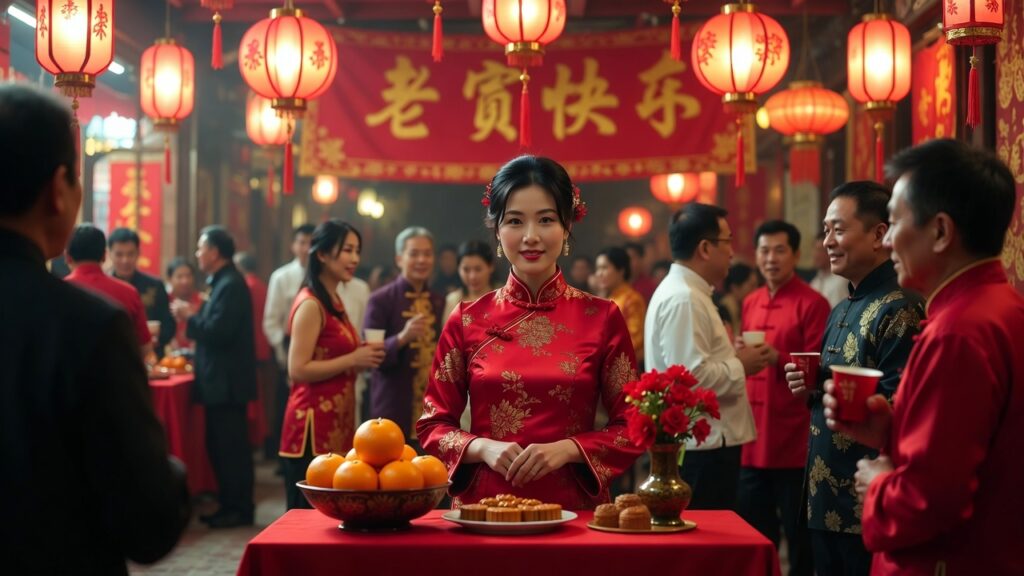
The celebration of the Lunar New Year extends far beyond the borders of mainland China. Major nations that officially observe the holiday include South Korea (where it is called Seollal), Vietnam (Tết), Singapore, Malaysia, Indonesia, and Taiwan.
It is also widely celebrated in the Philippines, Thailand, Mongolia, and Brunei. In 2026, the global diaspora ensures that massive celebrations also occur in Western hubs like New York City, London, Sydney, and Vancouver. Each country adds its own unique flavor; for instance, while China focuses on red envelopes and firecrackers, Korea emphasizes traditional attire (Hanbok) and respectful bowing to elders.
Despite these regional variations, the core themes of family, gratitude, and hopeful anticipation for the coming year remain the universal thread that binds these diverse nations together.
Table: Lunar New Year Calendar & Animal Cycle
| Year | Date of New Year | Zodiac Animal | Element |
| 2024 | February 10 | Dragon | Wood |
| 2025 | January 29 | Snake | Wood |
| 2026 | February 17 | Horse | Fire |
| 2027 | February 6 | Goat | Fire |
| 2028 | January 26 | Monkey | Earth |
Does Japan Celebrate Lunar New Year?
A common misconception is that Japan celebrates the Lunar New Year alongside its neighbors. However, the answer is generally no. Historically, Japan did observe the lunar calendar, but during the Meiji Restoration in 1873, the country officially switched to the Gregorian calendar to align with Western nations. Consequently, the Japanese “New Year” (Oshogatsu) is celebrated on January 1st. In 2026, while the rest of East Asia celebrates in February, Japan will be operating as usual.
That said, the Lunar New Year is not entirely absent; vibrant festivities are still held in Japan’s major Chinatowns, such as those in Yokohama, Kobe, and Nagasaki. These areas become hubs of lion dances and traditional food, catering to the Chinese-Japanese community and tourists who want to experience the lunar festivities within Japan.
Understanding the 2026 Lunar New Year Animal
The Chinese zodiac follows a 12-year cycle, with each year represented by a specific animal. In 2026, we enter the Year of the Horse. Specifically, 2026 is the year of the Fire Horse, a rare combination that occurs only once every 60 years. In Chinese astrology, the Horse is the seventh animal in the zodiac and is associated with strength, speed, and an independent spirit.
Those born in a Horse year are said to be energetic, warm-hearted, and talented.25 The addition of the “Fire” element in 2026 adds a layer of intensity and passion. While Horse years are generally seen as times of progress and travel, traditional beliefs suggest that those whose birth year matches the current zodiac animal (their Ben Ming Nian) should be extra cautious, as it is believed to be a year of significant life tests.
The Legend of the Monster Nian
The origins of many Lunar New Year customs can be traced back to the legend of Nian, a terrifying beast said to attack villages at the start of every year. According to folklore, villagers eventually discovered that the monster was terrified of the color red, bright lights, and loud noises. This led to the traditions we see today: hanging red lanterns, pasting red couplets on doors, and setting off deafening firecrackers.
In 2026, these rituals are still practiced with vigor. Even in urban environments where real firecrackers might be restricted, digital displays and red decorations remain non-negotiable symbols of protection. By keeping these traditions alive, families feel they are metaphorically “scaring away” the hardships of the past and ensuring their homes are safe and auspicious for the upcoming Year of the Horse.
Traditional Foods and Their Meanings
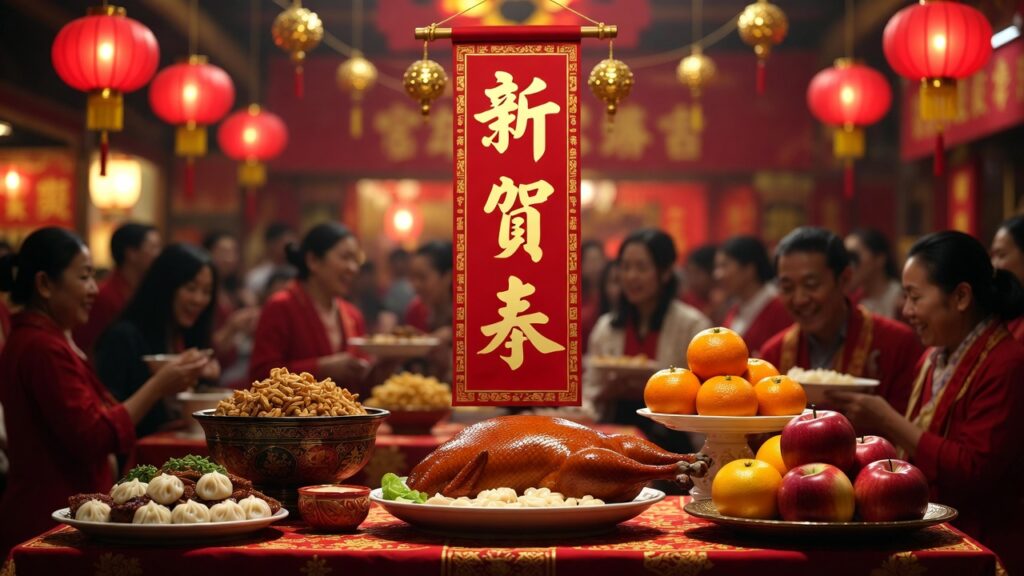
Food is the centerpiece of any Lunar New Year celebration, with each dish chosen for its symbolic meaning. In 2026, the “Reunion Dinner” on New Year’s Eve remains the most important meal of the year. Standard dishes include Fish, as the word for fish in Mandarin sounds like “surplus,” symbolizing wealth.
Dumplings are essential in Northern China because their shape resembles ancient silver ingots, representing prosperity. In the south, Niangao (sticky rice cake) is popular because its name sounds like “getting higher year by year,” implying a promotion or growth in status. In Vietnam, Bánh Chưng (square rice cakes) are shared to honor ancestors, while Koreans enjoy Tteokguk (rice cake soup) to signify gaining another year of age and wisdom. Every bite is a wish for a better future.
Red Envelopes: The Gift of Luck
One of the most beloved traditions of the Lunar New Year is the exchange of Red Envelopes, known as Hongbao in Mandarin or Ang Pao in Hokkien. These envelopes, filled with “lucky money,” are typically given by married couples and elders to children and unmarried adults.
In 2026, the tradition has evolved with technology; millions of people now send “Virtual Red Envelopes” via social media apps like WeChat or Alipay. The significance lies not in the amount of money, but in the red paper itself, which is believed to bring good luck and ward off evil spirits. It is considered a way to pass on blessings from the older generation to the younger one. Recipients are expected to receive the envelope with both hands and never open it in front of the giver to show respect.
Cleaning and Decorations for Prosperity
Before the new year officially begins, it is customary for families to perform a deep “Spring Cleaning” of their homes. This is more than just housework; it is a spiritual practice meant to sweep away the “dust” and bad luck of the previous year. However, once the New Year arrives, cleaning is strictly forbidden for the first few days, as people believe they might accidentally sweep away the newly arrived good luck.
In 2026, homes are decorated with blooming flowers like peach blossoms or kumquat trees, which symbolize fruitfulness and growth. Red diamond-shaped papers with the character Fu (Good Fortune) are hung upside down on doors, a play on words meaning “fortune has arrived.” These visual cues turn entire cities into a sea of red and gold, creating an atmosphere of shared joy and optimism.
The Global Impact of Lunar New Year
As we witness in 2026, the Lunar New Year has become a global economic and cultural powerhouse. Major luxury brands release “Year of the Horse” limited editions, and cities around the world host parades that draw millions of spectators. It is no longer just an “Asian” holiday; it is a time when people of all backgrounds come together to appreciate the themes of family and hope.
The “Spring Travel Rush” in China remains the largest annual movement of humans on Earth, testing the limits of transportation infrastructure and boosting the global travel industry.43 This worldwide recognition highlights the soft power of Asian cultures and the universal appeal of a holiday that celebrates the fundamental human desire for a fresh start and a prosperous future for one’s family.
Frequently Asked Questions (FAQs)
Not exactly. While they share the same dates, “Lunar New Year” is a broader term that encompasses various Asian cultures (like Korean and Vietnamese) that have their own unique names and traditions.44
In Asian folklore, red symbolizes fire, which is believed to scare away the monster “Nian.”45 It also represents energy, happiness, and good fortune.
Traditional taboos include avoid washing your hair or clothes (so you don’t wash away luck), avoid using scissors or knives, and never sweeping the floor.
In Mandarin, you can say “Xin Nian Kuai Le.” In Cantonese, “Gung Hei Fat Choy” is popular.46 In Korean, say “Saehae bok mani badeuseyo.”47
The full festival lasts 15 days, starting on February 17 and ending with the Lantern Festival on March 3, 2026.
Conclusion
The Lunar New Year of 2026 is poised to be an unforgettable celebration of resilience and renewal. As the Year of the Fire Horse gallops in, it brings a message of courage and high energy that resonates across the globe. Whether you are participating in a massive street parade in San Francisco, sharing a quiet tteokguk meal with family in Seoul, or sending digital red envelopes in Singapore, you are part of a 3,000-year-old tradition that honors the past while looking forward to a brighter future. By understanding the dates, animals, and regional customs, we can all appreciate the rich diversity of this magnificent festival. May the Fire Horse bring you the speed to reach your goals and the strength to overcome any obstacles in the year ahead!
For More Information, visit newsreflect
About the Author


